GPS Maps Voice Navigation
- 4.1
- Rating
- 1.00M
- Installs
- Free
- Price
 Analysis by App-foxy
I noticed the same thing almost immediately with GPS Maps Voice Navigation: the basic idea is simple, but the quality of a trip depends heavily on how carefully you prepare it. This is a free travel and local app from Green Lines that combines map guidance with GPS voice navigation, and after using it as a practical route companion, I see its appeal. It is aimed at people who want directions without turning navigation into a complicated project.
The app has a strong public reception, with a 4.8 average from around 1.4 thousand ratings and more than a million installs. Those figures suggest that it is not a niche experiment. Still, a high rating does not remove the small frustrations that can appear when location services, mobile data, or voice output are not ready. My experience is that the best results come from treating the first few minutes as a setup check rather than starting a journey in a hurry.
Where people usually get stuck
The most common problem is not necessarily the route itself. It is the gap between opening a navigation app and actually being ready to follow directions. A map may load slowly, the starting position may take time to settle, or the voice may be difficult to hear over traffic. These issues can make a useful app feel unreliable even when the underlying problem is outside the app.
You May Also Like

 Blood Strike: 2.5 Anniversary
Blood Strike’s Loadouts Turn Every Drop Into a Tactical Gamble
A close look at Blood Strike’s custom loadouts: how fast access to signature weapons reshapes its battle royale rhythm, rewards preparation, and narrows the gap between fights.

 Pandora - Music & Podcasts
Pandora’s Music Is Easy to Start, but Harder to Recover
Pandora’s strength is its low-effort path from a seed to a station. Its weak spot is how much confidence it asks you to place in connection, setup, and quiet recovery.

 8 Ball Pool
 Is Built on Rivalries, Rematches, and Routine
A close look at the rivalries, rematches, shared routines, and unanswered safety questions that turn a quick pool match into a persistent mobile community.

 Samsung Music
’s Quiet Strength Is Playing What You Already Own
Its reach comes less from spectacle than from dependable access to a personal library. That simplicity is both the app’s strongest retention engine and its ceiling.

 AccuWeather: Weather Radar
AccuWeather Review: A Quick, Clear Forecast for Everyday Decisions
For everyday plans, the best forecast is the one you can understand quickly. AccuWeather makes rain timing, radar, and local conditions easy to act on, with a few trade-offs.

 Hill Climb Racing
Why Hill Climb Racing Still Turns Crashes Into One More Run
A tiny car, a bumpy hill and one more upgrade: Hill Climb Racing keeps resurfacing because its simple chaos makes every near-miss feel personal.
More From Our News Desk



I recommend opening GPS Maps Voice Navigation before leaving, while the phone is still stationary. Give the GPS a moment to identify your position, then check that the destination is the place you really mean. This matters especially for businesses with several branches, large venues with multiple entrances, and addresses that lead to a general complex instead of a specific doorway.
Another point where users can get confused is voice guidance. Seeing a route on the screen and hearing spoken instructions are related, but they are not exactly the same experience. If the phone is muted, the media volume is low, or another audio source is taking priority, the map can appear to work normally while the spoken part seems broken. I always test the sound before moving, rather than discovering the problem at the first turn.
The most useful habit is to verify the route while you still have time to correct it. A quick look at the starting point, destination, and first major turn prevents many avoidable mistakes. This is particularly helpful when you are standing near parallel roads, inside a parking area, or beside a large building that blocks a clear GPS position.
Setup checks that make a real difference
My preferred setup is deliberately boring. I make sure the phone has enough battery for the trip, location is active, and the device has a usable connection before I request directions. I also keep the screen clean and place the phone where it can be seen safely without forcing me to look down for too long. Navigation should reduce distraction, not create another one.
Because this is an Android app with a minimum operating system requirement of Android eight, compatibility is straightforward for many phones, but older devices can still behave differently. A phone that is struggling with several demanding apps at once may take longer to display a route or respond to taps. Closing unnecessary apps before a long journey is a sensible step, especially on an older handset.
The current version is 6.1.6, so keeping the app updated is worth considering when a problem appears repeatedly. An update can improve general stability, but it is not a cure for every navigation issue. If the phone cannot obtain a dependable location or the connection is unstable, installing the same app again will not magically fix the surrounding conditions.
I also check the phone’s sound separately from the app. Playing a short piece of audio confirms whether the speaker works and whether the volume is high enough. If I use the phone with a car audio system, I check which device is actually producing sound. This simple test distinguishes a navigation issue from a general audio-routing issue.
One practical detail is destination spelling. Voice search and typed searches are convenient, but they can select a similarly named street or place. I read the result rather than accepting the first suggestion automatically. For a trip that matters, I compare the displayed area with the address I received. That extra moment is more valuable than correcting a wrong turn several minutes later.
A calmer workflow for everyday trips
For a normal errand, I use the app in three stages. First, I choose the destination while parked or standing still. Second, I inspect the route and listen for the first spoken instruction. Third, I begin moving only after the blue position indicator appears reasonably close to where I am. This workflow sounds obvious, but it prevents the app from calculating from an old position or from a nearby road that I am not actually on.
Imagine that I am visiting a medical office in an unfamiliar part of town. I would search for the office, check whether the route ends at the correct street, and then allow extra attention for the final approach. The last part of a trip is often harder than the main drive because entrances, parking areas, and one-way streets can make the map’s endpoint feel less precise than the route through open roads.
When a turn is missed, I do not immediately close the app. I slow down safely, let the navigation recalculate, and wait for a new instruction. If the route does not update, I stop somewhere legal and safe before checking the phone. Repeatedly tapping the screen while driving is a poor trade-off, even if the app itself is responding correctly.
A useful recovery technique is to return to the destination search rather than repeatedly forcing the same route. If the initial result was ambiguous, selecting the place again can clarify whether the issue came from the chosen endpoint. I also check that the phone has not been placed in a position where its GPS signal is obstructed by a dense interior or surrounded by tall structures.
For walking, I pay closer attention to the map than I would while driving. A road route may not reflect a comfortable pedestrian path, and the final approach can be confusing around large blocks or private entrances. I treat the spoken guidance as a helpful prompt, not as permission to cross a road or enter an area without checking what is physically in front of me.
For cycling or local exploration, I use the same caution. A route can be useful for orientation without answering every question about traffic, surface quality, access, or safety. GPS Maps Voice Navigation is best viewed as a direction tool, not a substitute for observing signs and surroundings.
When the app is not the cause
GPS accuracy is affected by the environment. Tall buildings, underground spaces, covered parking, and dense urban streets can delay or distort the position shown on screen. If the marker jumps briefly, that does not automatically mean the app has failed. I wait until I reach a more open area and see whether the position settles.
Mobile connectivity can also change the experience. A weak signal may delay map content or route responses, especially when the trip begins in a place with poor coverage. Moving to a safer open location and trying again is more useful than repeatedly pressing the same button. If the app works normally elsewhere, the local connection or surroundings may be the real explanation.
Voice problems often belong to the phone rather than the navigation software. A connected headset, car system, silent mode, or low media volume can redirect or suppress spoken instructions. I test each part separately: phone speaker, volume controls, and any connected audio device. This avoids blaming the app before checking the simplest causes.
Battery-saving behavior can also affect location performance on some phones. If the position stops updating reliably, I inspect the device’s general battery or background restrictions and make sure the app is allowed to operate normally during the journey. I do not change settings randomly; I make one adjustment at a time so I can tell what helped.
There is another important limitation: no navigation app can replace local judgement. Temporary road closures, newly changed entrances, private roads, construction, and unclear signs can make a perfectly reasonable route inconvenient. I follow visible road rules and use the screen as assistance. If the physical situation conflicts with the instruction, the physical situation wins.
What I like about the everyday experience
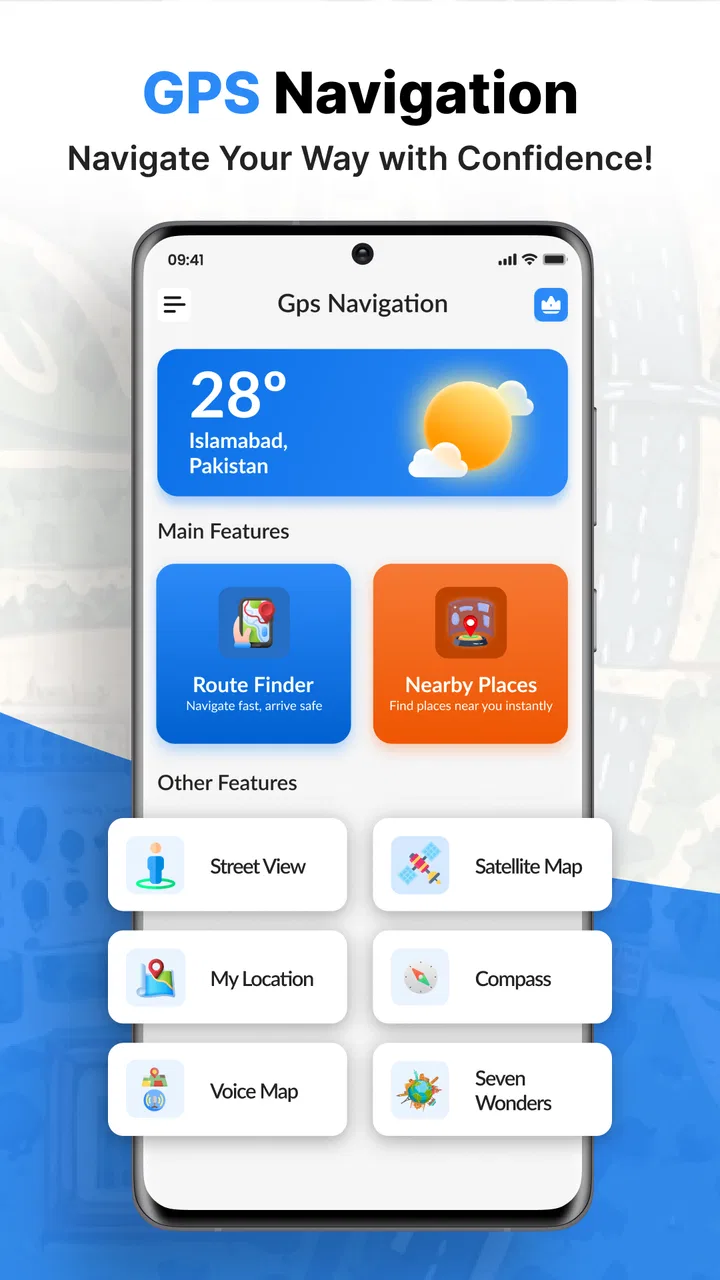
The strongest part of GPS Maps Voice Navigation is its direct purpose. It focuses on maps and spoken directions instead of asking me to learn a complicated travel system. That makes it approachable for occasional drivers, visitors in an unfamiliar area, and anyone who wants a simple route companion on an Android phone.
Its free entry point is another advantage. You can try it without paying upfront, which makes it easy to judge whether the interface and guidance suit your habits. There are in-app purchases ranging from $0.99 to $119.99 per item, so I would review any purchase screen carefully before confirming anything. The free availability is useful, but it should not be confused with every possible function being free.
The Everyone content rating also makes the app broadly suitable from an age-classification perspective. That does not mean every user will find it equally comfortable. Someone who needs highly specialized transport information, detailed pedestrian planning, or professional fleet tools may prefer a service designed specifically for that purpose.
I appreciate that the app can serve different levels of need. For a familiar commute, I may only need a quick glance at the map. For a first visit to an unfamiliar address, I rely more on the voice instructions and the route overview. This flexibility is more useful to me than a long list of decorative options.
Where it falls short compared with alternatives
The usual alternatives in this category can be better when a user needs a broader travel ecosystem. A large, established mapping service may offer deeper place information, richer public transport details, more extensive business data, or stronger integration with other services. A dedicated offline navigation tool may be preferable when connectivity is uncertain. A specialist walking or cycling app may provide more relevant route context for those activities.
That does not make GPS Maps Voice Navigation a poor choice. It means the app is most convincing when the main requirement is straightforward GPS guidance. I would choose it for everyday directions and uncomplicated trips, but I would compare alternatives before relying on it for remote travel, complex transit journeys, or routes where offline access is essential.
The trade-off is simplicity versus depth. A simpler navigation experience can be easier to understand under pressure, yet it may not answer every question about a destination or the surrounding area. Before a long journey, I would use another source to confirm opening arrangements, parking details, or local restrictions rather than expecting a route app to provide all of that context.
Another trade-off involves attention. Voice guidance is convenient, but spoken instructions can arrive at an awkward moment if the road layout is complicated or the phone’s audio is hard to hear. I still glance at the map only when safe, and I prepare for major junctions in advance. No voice system can remove the need to watch the road.
Who should try it and who should skip it
I think this app is a good match for someone who wants free, familiar-feeling GPS directions on Android and is willing to perform a quick setup check before travelling. It is also suitable for occasional users who do not want to learn a large travel platform just to reach a new address.
I would be more cautious recommending it as a sole navigation solution to someone who regularly travels through areas with weak connectivity, depends on detailed offline maps, or needs specialized information for public transport, hiking, cycling, or commercial driving. In those cases, a more specialized alternative may be the better primary tool, with this app kept as a secondary option if its route guidance fits the trip.
It is also not ideal for a user who expects every destination search to be perfect without checking the result. The app can guide me, but I remain responsible for confirming that the selected place, entrance, and road situation make sense. That small amount of involvement is part of using any GPS navigation app responsibly.
My practical verdict after using it
GPS Maps Voice Navigation is a sensible travel and local app for straightforward route guidance. Green Lines has produced something that is easy to understand at its core: choose where to go, view the route, and use voice instructions while moving. Its popularity, free price, and current 6.1.6 release make it an easy app to test for everyday Android navigation.
My recommendation comes with one condition: prepare before you start. Confirm the destination, check the starting position, test the audio, and remember that buildings, weak connectivity, and phone settings can affect the result. Those checks take very little time and remove most of the friction I encountered.
For a short drive to a new shop, an appointment across town, or a visit to an unfamiliar address, I would happily keep it available. For a remote journey or a specialized travel need, I would pair it with a more suitable source rather than asking one general navigation app to do everything. If you want uncomplicated GPS guidance and are comfortable using your own judgement alongside it, this is a worthwhile free option to try.
FAQs for GPS Maps Voice Navigation
01What features does GPS Maps Voice Navigation offer?
GPS Maps Voice Navigation provides turn-by-turn voice-guided navigation, real-time traffic updates, offline maps, and points of interest. It also includes lane guidance, speed limit alerts, and an option to customize voice commands. This makes it ideal for drivers, cyclists, and pedestrians who need reliable directions.
02Is GPS Maps Voice Navigation available offline?
Yes, GPS Maps Voice Navigation offers offline functionality. Users can download maps for specific regions or countries, allowing them to navigate without an internet connection. This is particularly useful in areas with poor network coverage or when traveling abroad to avoid roaming charges.
03How accurate is the traffic information provided by the app?
The app provides real-time traffic updates sourced from various data providers. While generally accurate, users should be aware that traffic conditions can change rapidly. It's advisable to keep the app updated and occasionally check alternative routes to ensure the most efficient travel experience.
04Is GPS Maps Voice Navigation free to use, or are there in-app purchases?
The app is free to download and use with essential navigation features. However, it offers in-app purchases for premium features such as advanced map updates, ad removal, and additional voice options. These purchases enhance the user experience but are not necessary for basic functionality.
05How does GPS Maps Voice Navigation handle privacy and data security?
GPS Maps Voice Navigation prioritizes user privacy by implementing encryption for data transmission and offering settings to manage location-sharing features. Users can choose what data to share and with whom. The app complies with GDPR regulations, providing transparency and control over personal information.
Pros
- Voice-guided navigation simplifies driving.
- Offline maps available for data savings.
- Real-time traffic updates enhance routes.
- User-friendly interface for easy use.
- Wide range of map details and layers.
Cons
- Can drain battery quickly on long trips.
- Occasional GPS signal drops in rural areas.
- Ads can be intrusive in free version.
- Requires initial data for offline maps.
- Limited customization of voice options.

GPS Maps Voice Navigation
Gallery